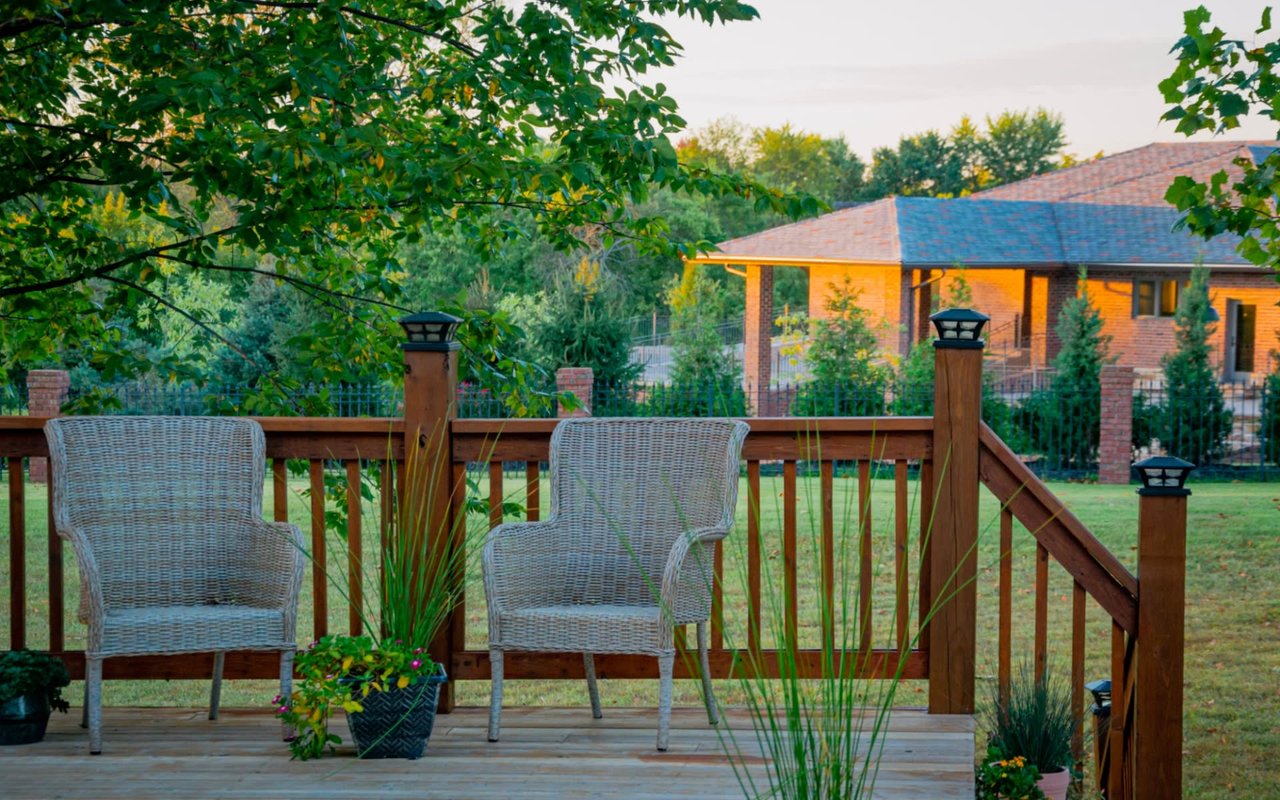
Landscaping a new home in Colorado Springs means designing around a semi-arid, high-elevation climate, near-annual hail, and water rules that reward drought-tolerant choices, not around the leafy, moisture-loving yards common elsewhere in the country. The city sits above 6,000 feet with roughly 300 days of sunshine a year, low humidity, and a growing season squeezed between late-spring and early-fall frost. Add Colorado Springs Utilities' outdoor watering guidance and the covenants many neighborhoods enforce through their homeowners associations, and a plan that worked in Kansas City or Atlanta often fails here within a season. Homeowners who choose adapted plants and hail-tough, water-wise hardscape from the start save themselves a costly redo a few years in. This guide covers what actually holds up in the Pikes Peak region, from plant selection to defensible space near the forest edge.
Key Takeaways
- Native and adapted plants such as Colorado blue spruce, pinon and ponderosa pine, Russian sage, and penstemon tolerate intense UV, wind, and freeze-thaw cycles far better than bluegrass lawns or moisture-loving ornamentals like hydrangeas.
- Colorado Springs Utilities' Water Wise Rules govern outdoor watering, and its Native Grass Lawn Program and residential irrigation rebates help offset the cost of converting thirsty turf.
- Many neighborhoods enforce HOA or Architectural Control Committee covenants on fence height, turf coverage, and whether xeriscaping is even allowed, so homeowners should read those documents before designing anything.
- Hail is a near-annual event on the Front Range, so gravel or rock mulch and hail-tolerant perennials outlast wood mulch beds and delicate ornamentals.
- Properties near Black Forest, Cedar Heights, and other forested edges benefit from defensible-space design, both for wildfire mitigation and often for insurance eligibility.
Colorado Springs' Climate Sets the Rules for Landscaping
Every planting decision in Colorado Springs starts with the elevation and the dryness, not with what looks good in a catalog photo. Homeowners moving from lower, wetter climates often bring plant lists that were never bred for this environment, and those choices usually show stress by the second summer.
Elevation, Sun, and a Short Growing Season
Colorado Springs sits above 6,000 feet, which means thinner air and stronger UV exposure that punish anything not built for them. The region logs roughly 300 sunny days a year, but low humidity pulls moisture out of soil fast, and the growing season runs short, bookended by frost risk in late spring and again in early fall. A plant that thrives in a humid, moderate climate often scorches here by July or gets nipped by a surprise freeze in September.
Freeze-Thaw Winters Test Root Systems
Winters here swing between mild, sunny afternoons and hard overnight freezes, and that cycle stresses root systems more than steady cold ever would. Plants that need consistently moist, temperate winters (many hydrangea varieties among them) struggle without heavy supplemental care. Fall planting works well for trees and shrubs, since it gives roots a few extra weeks to settle before the ground locks up.
Plants and Turf Built for the High Plains
The plants that hold up in Colorado Springs tolerate long dry stretches and shrug off temperature extremes. Homeowners who start with this list save themselves years of replanting.
Trees and Shrubs That Take the Punishment
Colorado blue spruce anchors a large share of established Colorado Springs yards, handling both the winter cold and the summer sun without complaint. Pinon and ponderosa pine do well on the drier, rockier lots common on the west side of town, where soil drains fast and irrigation runs inconsistent.
Turf That Doesn't Need Daily Watering
Buffalo grass and blue grama are the native turf alternatives that actually work here, tolerating drought and foot traffic on a fraction of the water a bluegrass lawn demands. Kentucky bluegrass, by contrast, needs heavy irrigation to survive the dry summer stretch and browns out fastest under any watering guidance.
Perennials That Fill In the Rest
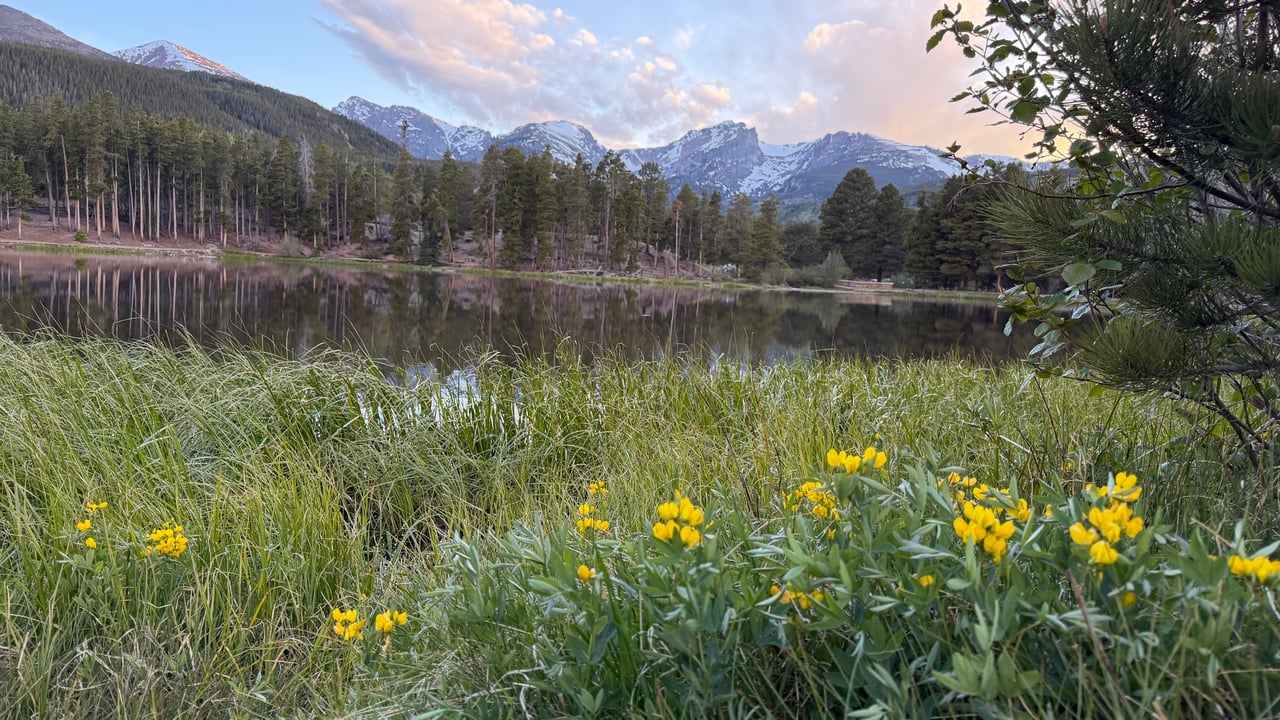
Russian sage, yarrow, penstemon, and ornamental grasses round out a planting plan with color and texture that survives hail and drought without daily attention. Most stay dormant through the coldest months and fill back in fast once the weather turns.
Struggles in Colorado Springs | Works at 6,000 Feet |
|---|---|
Kentucky bluegrass lawn | Buffalo grass or blue grama |
Hydrangeas and other high-water ornamentals | Russian sage or penstemon |
Wood mulch beds | Gravel or rock mulch |
Main Takeaway: A yard built from Colorado blue spruce, pinon or ponderosa pine, native turf grasses, and a handful of hardy perennials needs far less irrigation, holds up through hail season, and still looks intentional rather than sparse.
Do Colorado Springs Utilities' Water Rules Limit What Homeowners Can Plant?
They shape choices more than they restrict them. Colorado Springs Utilities maintains Water Wise Rules governing outdoor watering, and while the utility's 2026 messaging has leaned toward encouraging cautious water use rather than issuing hard restrictions, the incentive to plant efficiently hasn't changed. The region's dry, high-plains climate makes outdoor water use one of the biggest variables a household controls.
Homeowners converting a traditional lawn to native turf can also apply for the Native Grass Lawn Program, which rebates part of the cost of replacing thirsty turf with buffalo grass, blue grama, or similar adapted grasses. Colorado Springs Utilities also offers residential irrigation rebates for homeowners who upgrade sprinkler systems rather than tear out turf altogether, so a full conversion often costs less out of pocket than expected.
Local Tip: Check current Water Wise Rules before scheduling irrigation installation or a sprinkler system audit. Watering windows and frequency guidance shift seasonally, and a system programmed against last year's schedule can run afoul of this year's rules without anyone noticing.
Checking HOA Covenants Before Breaking Ground
Landscaping plans in Colorado Springs need to clear the neighborhood's covenants before they clear the ground. A large share of neighborhoods operate under an HOA or Architectural Control Committee, and those documents can dictate fence height and material, RV or trailer parking, how much of a lot must stay in turf, and whether xeriscaping is permitted at all.
Some older, established associations still require a minimum percentage of traditional grass, which catches homeowners off guard if they arrive planning a full native-turf conversion. Reading the covenants, and getting any redesign pre-approved by the ACC, belongs at the front of the process, not after materials are already ordered. Homeowners still house-hunting can build this into their search from the start; what to look for beyond square footage covers HOA covenants alongside the rest of what a property actually offers.
Designing for Hail, Wind, and Nearly Year-Round Outdoor Living
Colorado Springs sits in one of the more hail-prone stretches of the Front Range, and a plan that ignores that reality tends to need repairs every summer. The same sunshine that makes hail season painful also makes outdoor space usable nearly twelve months a year, so the smartest designs plan for both.
Hardscape and Mulch That Can Take a Beating
Gravel or rock mulch holds up far better than wood mulch, which hail pounds flat and heavy rain washes out of beds. Perennials selected for hail tolerance (Russian sage and yarrow among them) bounce back within weeks of a rough storm, while delicate flowering ornamentals often don't recover until the following season.
Fire Pits, Patios, and Windbreak Plantings
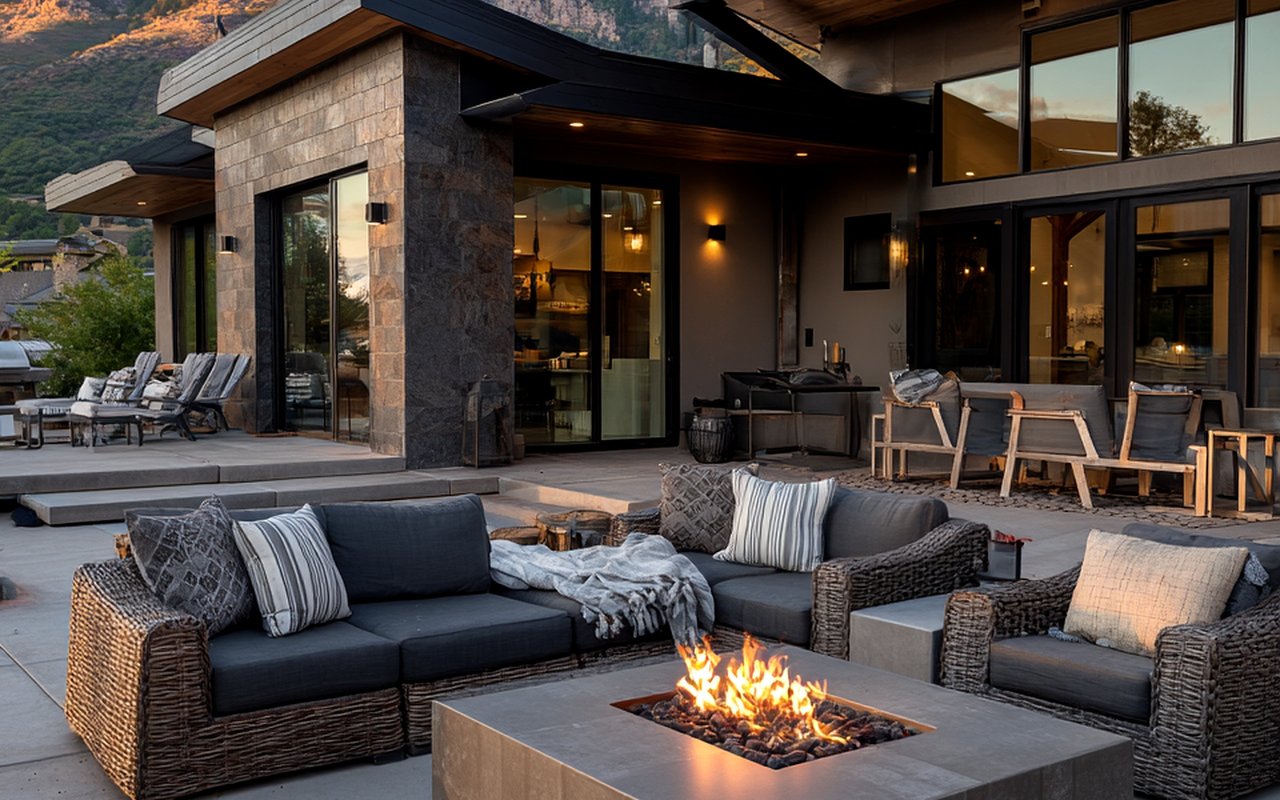
Patios and fire pits get real use in Colorado Springs well into the fall and on plenty of winter afternoons, given the sunshine. Afternoon wind off the Front Range catches new residents by surprise, and a row of windbreak plantings or a solid fence section on the windward side keeps an outdoor space usable on gusty days, not just calm ones.
Do Homes Near Black Forest or the Foothills Need Special Landscaping?
Yes, properties near the forested edges of town benefit from defensible-space design, both for wildfire mitigation and often for insurance. Black Forest and the western foothills near Cedar Heights carry a different set of considerations than a lot in the middle of a subdivision, and the same goes for any property backing to open space.
Defensible-space landscaping generally means:
- Spacing trees and shrubs further apart rather than planting them in dense clusters near the house
- Using less flammable mulch (gravel again outperforms wood here) in the zone closest to the structure
- Keeping dead brush and fallen needles cleared rather than left to build up under trees
- Choosing plant placement that gives fire crews clear access if it's ever needed
Insurance carriers increasingly ask about this kind of setup before renewing coverage on properties in these areas, so it pays to treat defensible space as part of the landscaping plan rather than an afterthought tacked on later.
Landscaping That Preserves the View
Many Colorado Springs buyers choose their lot specifically for a sightline toward Pikes Peak or the foothills, and a plan that ignores that view undercuts one of the property's main selling points. Tall, dense plantings placed without much thought can block a mountain view within a decade of growth, especially on west-facing lots where the terrain already does most of the framing.
Homeowners drawing up a planting plan should walk the lot at different times of day and mark which sightlines matter before choosing anything taller than a shrub for those spots. Anyone still shopping with a view in mind can find more on what to prioritize in finding a home with amazing views in Colorado Springs, which covers how lot orientation and terrain shape what a property delivers.
Landscaping a new Colorado Springs home well means working with the elevation, the dry air, and the hail, not against them, and checking the covenants before the first shovel goes in the ground. Homeowners weighing these choices while also house-hunting can browse current homes for sale in Colorado Springs to see how lot size and existing plantings vary across the area. For buyers who want a team that knows which lots hold water well and which blocks catch the worst of the wind, Pink Realty works with homeowners across Colorado Springs, Parker, Pueblo West, Falcon, Fountain, Monument, and the greater Denver metro to find a property that fits their budget and the way they want to use their outdoor space.